The Narrator and the Little Prince
The Narrator and the Little Prince share the most consequential relationship in the book, one that begins in the solitude of the African desert and ends with the prince's disappearance, leaving the narrator to reconstruct the meaning of their time together across six years of silence. Their bond is not merely a friendship but a profound attachment that reshapes how the narrator experiences the cosmos, as every star becomes a possible signal of the prince's well-being or a source of grief. The relationship is defined by an act of creation—the narrator draws a muzzle for the prince's sheep—and by a single forgotten detail, the leather strap, which becomes the hinge on which the narrator's hope and despair turn.
The Meeting and the Bond in the Desert
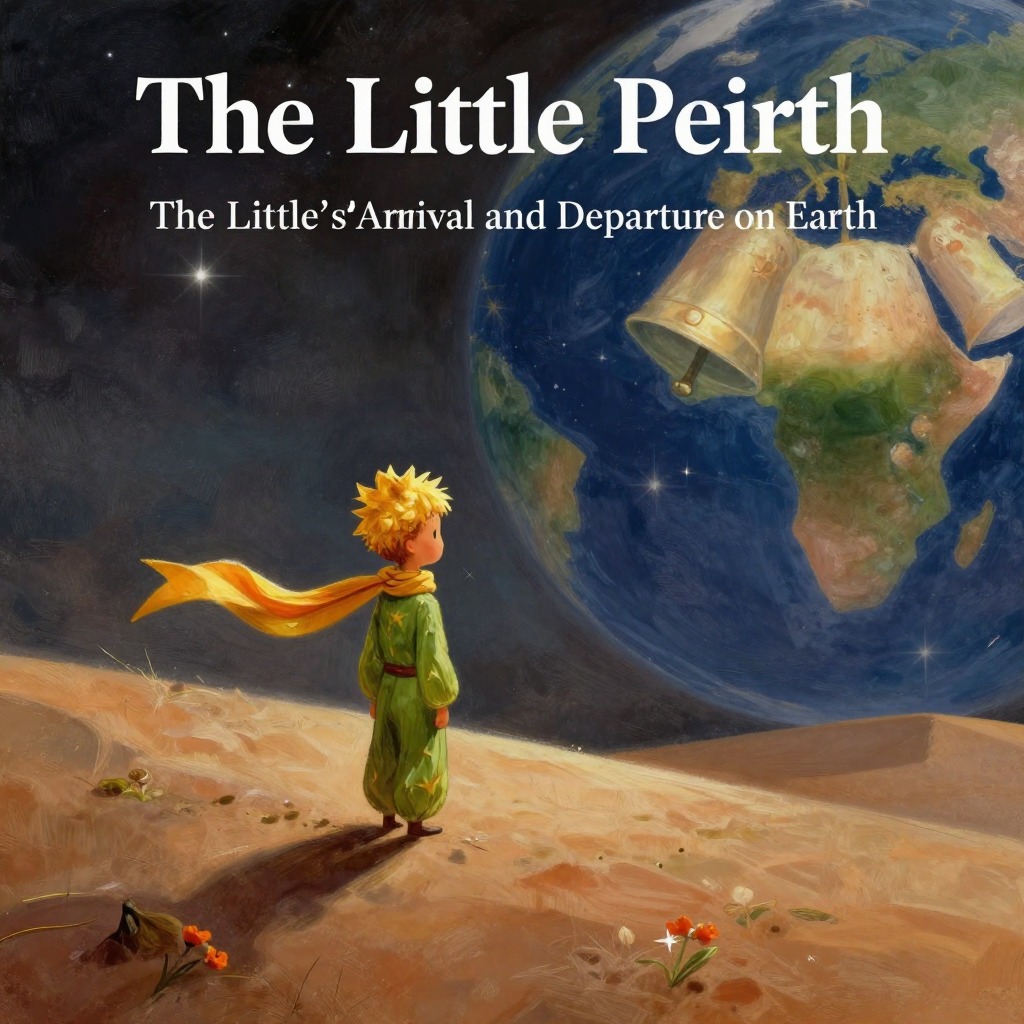
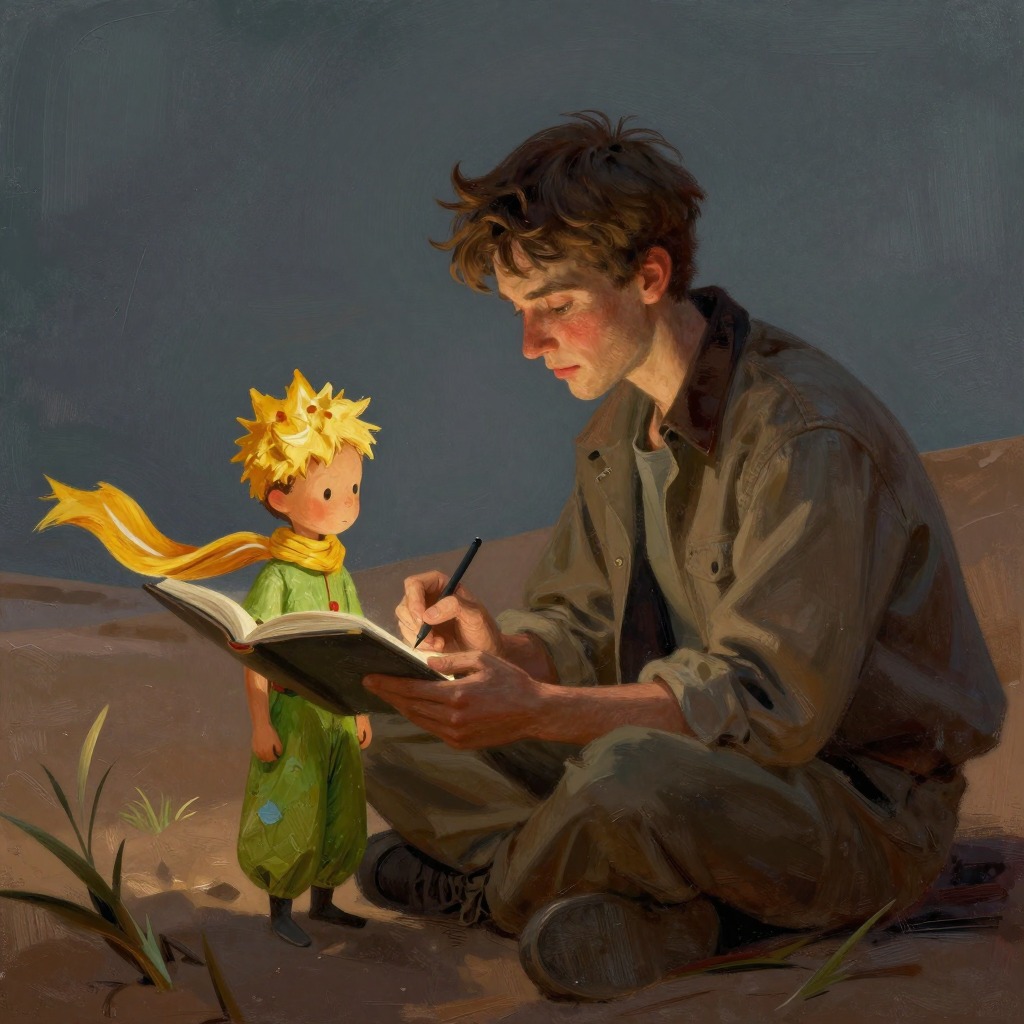
The narrator first encounters the Little Prince in the African desert, a setting that the narrator later calls "the loveliest and saddest landscape in the world." It is here that the prince "appeared on Earth, and disappeared," making the desert the sacred ground of their meeting and parting. The narrator's description of the landscape, drawn twice to impress it on memory, signals the depth of the impression the prince left. The bond is immediate and intimate: the narrator takes on the role of caretaker, drawing a muzzle for the prince's sheep, a gesture that shows both practical concern and emotional investment. The prince, for his part, is a figure of mystery—he "refuses to answer questions"—yet the narrator is drawn to him, captivated by his golden hair and his laughter.
The relationship develops through shared moments of care and observation. The narrator learns of the prince's planet, his rose, and his sheep, and becomes a confidant to the prince's worries. The narrator's act of drawing the muzzle is not just a favor but a symbol of their connection: it is a tangible object that links the narrator to the prince's daily life on his distant planet. The forgetting of the leather strap, however, introduces a flaw into this bond, a small omission that will haunt the narrator long after the prince is gone.
The Six Years of Silence and the Unspoken Story
After the prince's disappearance, the narrator returns to his own life, but the relationship continues to shape him from within. Six years pass before the narrator tells the story, a delay that suggests the depth of the wound and the difficulty of articulating it. The narrator admits, "I have never yet told this story," and when companions greet him on his return, they are "well content to see me alive," but the narrator is "sad," offering only the excuse, "I am tired." This silence is not forgetfulness but a form of preservation; the story is too precious and too painful to be shared casually.
The six-year gap also marks a period of internal processing. The narrator's sorrow is "comforted a little," but "not entirely," indicating that the relationship remains unresolved. The narrator finds solace in the belief that the prince "did go back to his planet," because no body was found at daybreak. This absence of a body becomes a source of hope, allowing the narrator to imagine the prince alive and well, tending to his rose and his sheep. Yet the same absence fuels doubt, as the narrator's mind turns to the forgotten strap and the possibility that the sheep has eaten the flower.
The Sheep, the Rose, and the Narrator's Uncertainty
The central anxiety of the narrator's post-desert life is the fate of the prince's rose, threatened by the sheep the narrator helped equip. The narrator's forgetfulness—leaving off the leather strap—means the prince "will never have been able to fasten it on his sheep," leaving the flower vulnerable. This single oversight becomes the pivot of the narrator's emotional swings. At times, the narrator reassures himself: "Surely not! The little prince shuts his flower under her glass globe every night, and he watches over his sheep very carefully . . ." In these moments, the narrator is "happy," and "there is sweetness in the laughter of all the stars." But at other times, doubt creeps in: "At some moment or other one is absent-minded, and that is enough!" The narrator imagines the prince forgetting the glass globe, or the sheep escaping silently in the night, and then "the little bells are changed to tears."
This oscillation between hope and fear reveals the narrator's deep investment in the prince's world. The relationship is not confined to the past; it lives on in the narrator's daily thoughts, as he wonders, "what is happening on his planet?" The sheep and the rose become proxies for the prince himself, and their imagined fate determines the narrator's emotional state. The narrator's uncertainty is not trivial; it is "a great mystery" that affects "nothing in the universe can be the same" if the sheep has eaten the rose. The narrator elevates this question to cosmic significance, insisting that "no grown-up will ever understand that this is a matter of so much importance."
The Narrator's Plea and the Enduring Connection
The relationship culminates in the narrator's direct address to the reader, a plea that extends the bond beyond the pages of the book. The narrator describes the desert landscape again, urging the reader to "look at it carefully" and to recognize it if they ever travel to the African desert. The narrator asks that, upon finding the spot, the reader "wait for a time, exactly under the star," and if a little man appears—one who laughs, has golden hair, and refuses to answer questions—the reader will know who he is. The narrator's final request is a cry of longing: "please comfort me. Send me word that he has come back."
This plea transforms the reader into a participant in the narrator's vigil, making the relationship a shared experience. The narrator's hope is that the prince's return can be confirmed, and that the sorrow of separation can be alleviated. The connection between the narrator and the Little Prince is thus not ended by the prince's disappearance; it is perpetuated through memory, storytelling, and the narrator's ongoing emotional engagement with the stars. The narrator's love for the prince is so profound that it reshapes the universe, turning the night sky into a field of bells or tears, and making the question of a sheep and a rose a matter of ultimate importance.